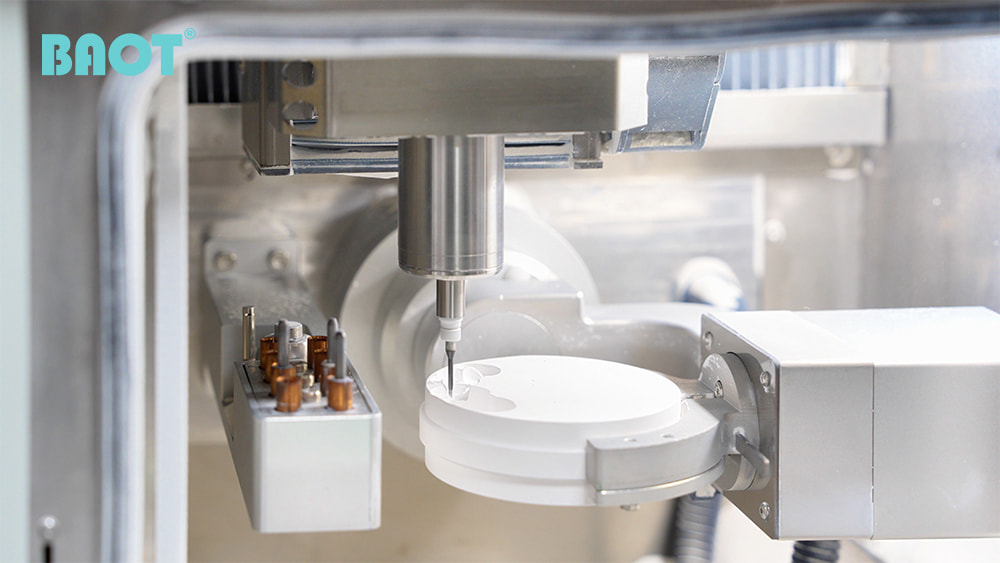
Milling a MIIYEN Zirconia Block
In a fully digital dental workflow, zirconia has become a cornerstone material. But choosing the right zirconia block for your CAD/CAM system isn’t just a technical decision—it directly affects efficiency, consistency, and the final esthetic outcome of your restorations.
Understanding Your Indications First
Before comparing products, start with your daily cases. Different restorations demand different properties:
A clear understanding of your case mix helps narrow down whether you need a high-strength zirconia, a highly translucent option, or a versatile multilayer solution.
Monolayer vs. Multilayer Zirconia
Traditional monolayer zirconia offers uniform strength but limited esthetics, often requiring more manual staining and layering.
Multilayer zirconia, on the other hand, is designed to replicate natural tooth structure with:
For many labs, multilayer zirconia has become the preferred choice because it simplifies workflow while improving consistency across cases.
Milling Performance Matters More Than You Think
Even the best material can become inefficient if it doesn’t mill well. Poor milling behavior can lead to:
A high-quality zirconia block should offer stable machining, clean edges, and predictable results after sintering. This is especially important for labs aiming to scale production or reduce technician dependency.
Sintering Behavior and Time Efficiency
Sintering is often a bottleneck in the workflow. When evaluating zirconia, consider:
Materials that maintain consistency across different sintering protocols can significantly improve turnaround time without compromising quality.
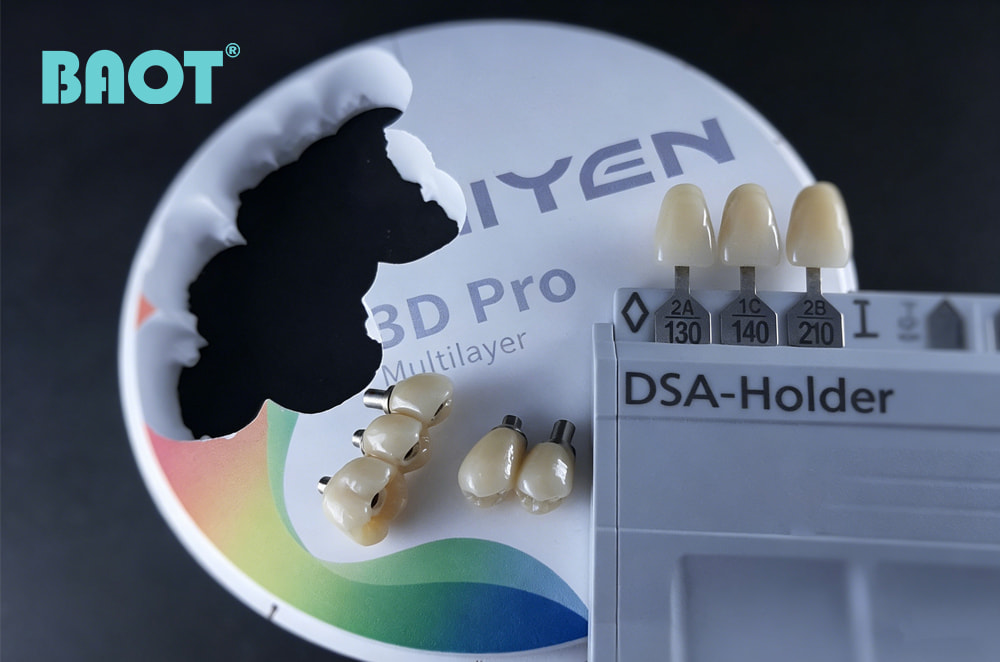
MIIYEN Zirconia Block for Implant-Supported Restorations
Esthetics: Built-In vs. Customized
While modern zirconia blocks come with improved shade gradients, achieving truly lifelike restorations often still relies on technician customization.
This is where external staining systems come into play. Even with a well-designed multilayer zirconia, subtle characterization—such as fissures, halo effects, or gingival tones—can elevate the final result from acceptable to highly natural.
In practice, many labs pair a stable multilayer zirconia (such as MIIYEN 3D PRO ML) with dedicated staining systems like Aurora and Pink to refine both tooth and gingival esthetics when needed—especially in anterior or implant cases.
Consistency and Long-Term Reliability
Beyond individual cases, consistency is what defines dependable material. Look for:
Inconsistent materials increase remake rates and reduce overall efficiency, costing more in the long run than the initial savings.
Final Thoughts
Choosing the right zirconia block is less about finding a “perfect” material and more about finding the right fit for your workflow.
A well-matched zirconia should:
When those elements align, your lab can achieve both productivity and quality—without unnecessary complexity.

NO.12 Building, Yujing industry Zone, 106 Qihao Road, Torch Development District, Zhongshan City, GuangDong Province
Seperating docking :+86-(0)760-8789 3825
Service line 1 :+86-(0)760-8789 6339
Service line 2 :+86 138 2393 9676
Email : mike.zhang@baot.biz




© 2026 BAOT Biological Technology Co., Ltd All Rights Reserved.


 Instruction for Use
 Download Center
 Blog
Blog